One of the most hotly debated topics in winemaking is corks versus caps.
Natural corks offer traditional aesthetics and control micro-oxygenation for long-term aging; however, being a natural product, quality can be inconsistent and there is always a risk of TCA (“cork taint”).
Agglomerate and colmated corks—corks that are made of natural cork particles (typically lower-grade) that are compressed and sealed—resemble solid natural corks in both appearance and function at a lower price but also run the risk of cork taint.
Synthetic corks are aesthetically similar to natural corks, with a higher-level consistency when it comes to density and size. Unlike natural corks, though, synthetic corks do not expand and contract with the change in atmospheric pressure and risk allowing oxygen into the bottle.
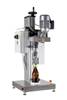
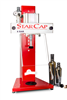
Aluminum screw caps, called “ROPP” (Roll On Pilfer Proof) Caps, provide an airtight seal and consistent quality across the board. They are significantly less expensive than both natural and synthetic corks, but each cap design requires a closing head specifically designed for it. While increasing numbers of winemakers have adopted the use of ROPP caps, especially for whites and rosés, some consumers still consider them to signify lower quality wines than those with natural cork.